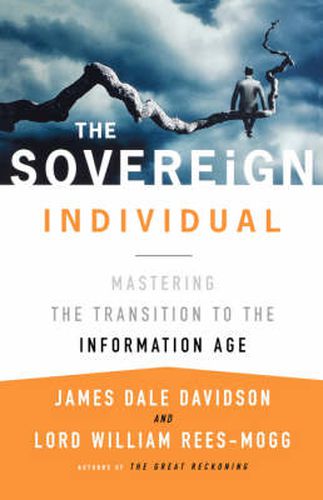
The Sovereign Individual
Published in 1997, The Sovereign Individual is one of the most prescient books ever written about the future of capitalism, the nation-state, and individual economic agency. Davidson and Rees-Mogg argued that the digital revolution would fundamentally alter the balance of power between governments and individuals. Cryptography, digital money, and the ability to transact across borders without intermediaries would erode the taxation and regulatory power of nation-states, and give rise to a new class of highly mobile, highly skilled individuals operating outside traditional institutional structures.
For investors and operators thinking about capital structures, fund domiciling, digital assets, and the long-term direction of global capital flows, this book provides a macro framework that most financial analysis does not. The thesis that the most productive individuals and capital will increasingly route around high-cost jurisdictions has direct implications for how you think about where to domicile funds, where to build businesses, and where to hold assets.
The book is uncomfortable in places. The authors' conclusions about inequality and the future of the welfare state are not softened for palatability. But the intellectual rigour is serious and the track record of their predictions is difficult to dismiss. Read it as a long-range scenario framework rather than a policy prescription.